
September 1, 2026
Not My Circus, Not My Monkeys, But Twenty Shirts Say Otherwise
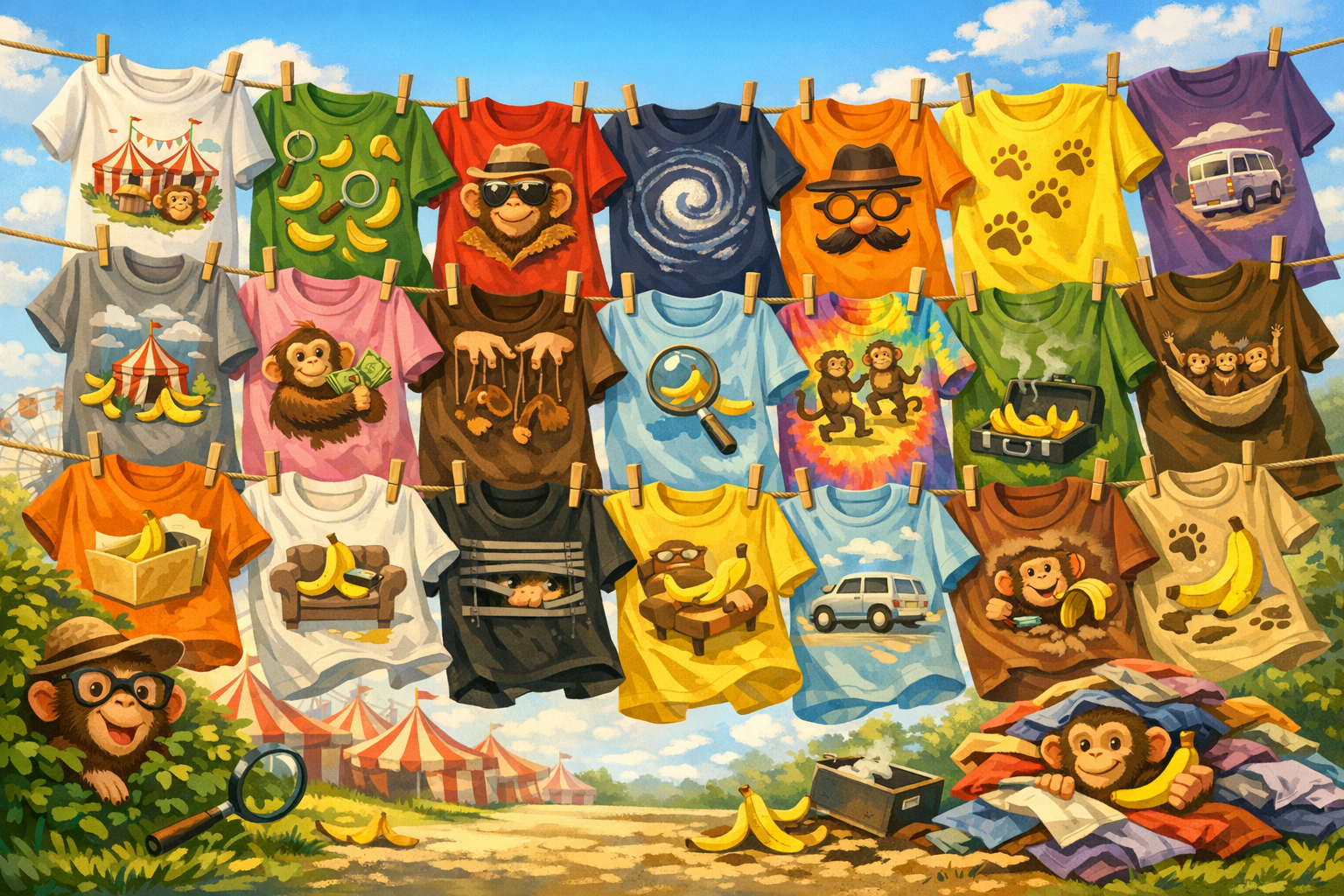
There is a folk saying about not owning a particular circus or a particular set of monkeys, and therefore having no obligation to worry about either of them. It is a genuinely useful piece of wisdom about boundaries. We took that wisdom, ran it through the print shop roughly twenty separate times, and each version quietly confesses that the speaker is, in fact, deeply involved in the circus. This was probably not the intended use of the idiom. We regret nothing.
The setup promises detachment, the punchline reveals otherwise
The original phrase works because it draws a clean line: someone else's problem, someone else's mess, not mine to manage. Our version keeps that clean line in the first half of the sentence and then spends the second half demolishing it. Not my circus, not my monkeys, but I definitely know all the clowns. Not my circus, not my monkeys, but I sold them the tickets. Not my circus, not my monkeys, but I am the one who let them out. Every single variant is the same shape: deny involvement, then immediately supply evidence of involvement so specific that the denial becomes the joke.
 I Just Work The Gate is a fairly typical entry in the lineup, technically a bystander, structurally an employee of the exact chaos being disavowed.
How many ways can one idiom be broken
At last count there were roughly twenty distinct endings bolted onto this one setup, and reading them back to back is closer to watching a bit build than browsing a product page.
- The accomplice endings. Gave them the keys, let them out, sold the tickets. Actively responsible, purely by their own admission.
- The bystander endings. Front row seat, great show though, knows the whole cast list. Present for everything, accountable for nothing, allegedly.
- The employee endings. Works the gate, trains the bears, knows the drill. Officially just doing a job, unofficially load bearing to the whole operation.
- The escalation endings. The tent is on fire, the show must go on regardless. The disclaimer stops even pretending to be reassuring.
Why one idiom could support this many jokes
Most punchlines only have one good ending. This structure turns out to have dozens, because the joke was never really about the circus, it was about the specific FORM of denying responsibility while quietly bragging about proximity to the chaos. That form transfers to nearly any workplace, friend group, or family. Swap circus and monkeys for literally anything chaotic, keep the same shape, and the joke still works. We know this because the newest addition to the lineup does not even use a circus.
 Not My Goose, Not My Juice keeps the exact rhythm of the original disclaimer and drops in a bird and a beverage instead, which somehow loses none of the shrug.
That is the real proof of a durable joke format: it survives being transplanted into nonsense. The rhyme carries the same flat, deniable tone as the circus version even though nobody involved could explain what the goose actually did, which is, in its own way, the most honest disclaimer in the whole lineup.
The idiom itself was already doing half the work
Part of why this holds up over twenty tries is that the original phrase is unusually well built for remixing. It has two nouns that rhyme, a clean two-beat rhythm, and a built-in pause right where a punchline slots in without any awkward rewiring. Compare that to trying the same trick on a plainer saying, something like not my problem, not my table, and the whole structure goes slack. Circus and monkeys give you spectacle and chaos for free before a single joke has been added. You cannot say the same for a table.
There is also a quieter reason this format keeps working past the point where it should have run dry: it flatters the reader into finishing the joke themselves. Anyone who has ever loudly insisted that a mess at work was not their responsibility, while privately knowing they handed someone the keys to make that mess possible, recognizes the shape instantly. The shirt does not have to explain the hypocrisy. It just needs to name the exact job title, and the reader supplies their own circus from memory.
Deny responsibility accordingly
Whichever chaos you are currently standing next to but refuse to be blamed for, there is very likely already a shirt for the exact shape of your denial. Pick the ending that matches how involved you actually were, then wear the confession proudly disguised as an alibi.
Never miss a post
New posts, new designs, and subscriber-only offers from Tickle Stitch. No spam, unsubscribe anytime.